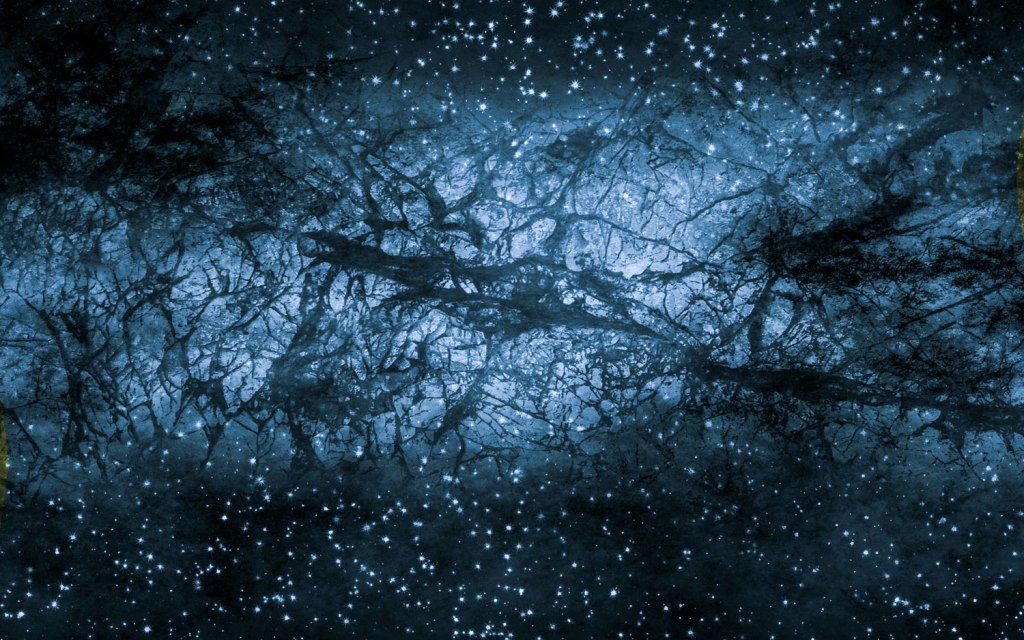
What most of us call “normal” matter, matter which makes up everything ever observed by humans, makes up only 5% of the universe. Dark energy makes up 68% of the universe and dark matter makes up the remaining 27%. Starting officially in 2017, physicists around the world began to celebrate dark matter through Dark Matter Day parties. Sponsored by the Interactions Collaboration, an international community of particle physics communication specialists, the parties allow scientists a safe space to speak inclusively instead of suspiciously about Dark Matter.
Astrophysicist Dan Hooper, a theorist at the Fermi National Accelerator Laboratory (Fermilab) in Batavia, Illinois, explains, “As far as matter goes, dark matter is five times more prevalent than ordinary matter, yet gets very little attention in the media. It’s not fair and it’s time we have honest conversations and calculations about it. Dark matter really does matter.”
Mr. Hooper’s colleague Lisa Goodwright adds, “Just because dark matter is not baryonic doesn’t mean we should ignore it. We need to think openly. Hypothetical labels like WIMP (Weakly Interacting Massive Particles) and MACHO (Massive Compact Halo Objects) only serve to stereotype and limit our imaginations as to what dark matter could really be.”
Senator Bernie Sanders, who normally does not enter non-climate based science discussions, is a strong supporter of #DarkMatterMatters. He emphatically exclaimed, “Look, we CAN NOT and WILL NOT allow the 5% to tell the rest of the universe what to do!”
 Society Garlic